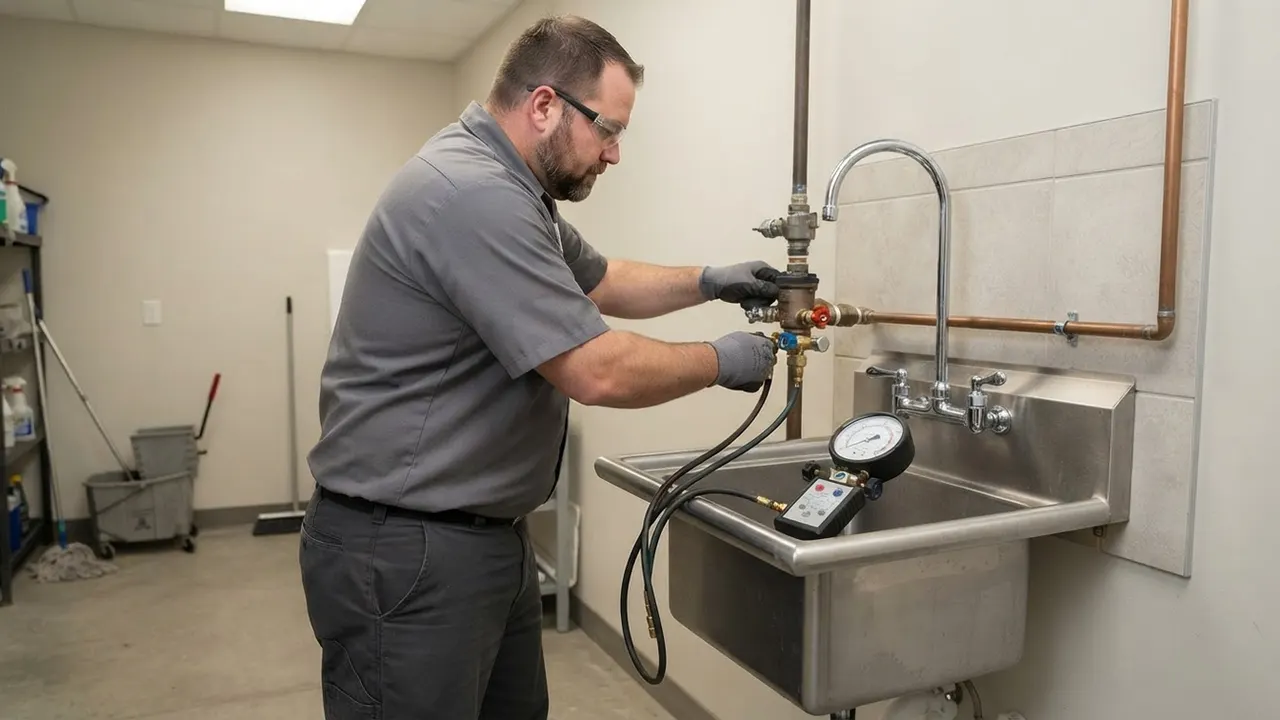
Full Assembly Inspection
We check the AVB body for corrosion, verify the install height above the critical level, and confirm the test cocks and air inlet are clear. Missing or capped test cocks are noted and corrected before the test.
Every AVB test visit covers the assembly inspection, the field performance test, the certification report, and filing with your water district. Repairs and parts are quoted separately if the assembly fails, and we tell you the price before we start.
We check the AVB body for corrosion, verify the install height above the critical level, and confirm the test cocks and air inlet are clear. Missing or capped test cocks are noted and corrected before the test.
We connect a backflow test kit with a differential pressure gauge and run the AVB test sequence. The air inlet must open at 1 psi or less and seal tight against the seat. Readings are recorded on the report.
You get a state-accepted test report showing the assembly make, model, serial number, test readings, and our tester certification number. The report is emailed as a PDF the same day.
We submit the report to your water district or cross-connection control office, including online portals. If a district rejects the form for any reason, we refile at no charge until it is accepted.
A failed AVB usually needs a disc kit, a float, or a full assembly replacement. We quote the repair on the spot, and most fixes are completed during the same visit because we stock common parts on the truck.
Atmospheric Vacuum Breaker AVB Testing in Utah is a field performance test that confirms your AVB assembly stops contaminated water from siphoning back into the potable supply. We isolate the assembly, attach a backflow test kit with a differential pressure gauge, and check that the air inlet opens and seals at the correct points. The test takes 20 to 40 minutes per assembly, and you get a pass or fail result on the spot.
Utah requires annual AVB testing on most assemblies, and irrigation systems are the usual reason a homeowner gets a notice from their water district. Spring start-ups and fall blowouts are the two busiest windows, but we run AVB backflow testing Utah-wide all year because freeze damage and debris in check valve bodies do not wait for a calendar. If you need a licensed AVB tester in Utah who can also handle the repair, we carry the parts.
Five steps from your first call to a filed certification. Most residential jobs are done in under an hour, and commercial properties with multiple assemblies get a written schedule before we start.
Schedule
Call or book online — a real human picks up and confirms a 2-hour arrival window.
Diagnose
Licensed tech inspects on-site, then walks you through the cause and your options.
Fix
The job is completed to code and done right the first time — no shortcuts, no surprises.
Guarantee
Every job backed by a written workmanship warranty — and we stand behind it.
Backflow Test Kit with Differential Pressure Gauge
The primary instrument for reading pressure differentials during the AVB test sequence. We calibrate kits annually and carry a spare gauge on every truck.
Hose Bib Adapter and Test Cock Wrench
Used to connect the test kit to the assembly test cocks without stripping the brass. We carry adapters for common thread sizes found on Utah irrigation systems.
Pressure Gauge and Bleed Valve
Lets us verify upstream pressure and bleed air out of the test setup before we take a reading. A trapped air bubble will skew a differential pressure reading.
Pipe Wrench and Screwdriver Set
For opening the AVB bonnet, removing the float and disc, and making repairs on the spot. We also carry a flashlight for assemblies in vaults or crawl spaces.
Manufacturer Repair Kits
Disc, float, and gasket kits for Watts, Febco, Zurn, Wilkins, Ames, Conbraco, Apollo, Clayton, Mueller, and Nibco assemblies. Stocking these on the truck is why most repairs are same-day.
Manufacturer AVB Test Procedure
Each assembly make and model has a specific test sequence. We follow the manufacturer procedure for the air inlet opening pressure and the seal check, and we record the readings on the certification report. This is what Utah water districts expect to see.
Critical Level Verification
Before we test, we measure the AVB install height against the highest downstream outlet. An AVB must sit at least 6 inches above the critical level, and it cannot be under continuous pressure. If it is installed wrong, we tell you before the test.
Cross-Connection Control Certification
Our testers hold Utah Division of Drinking Water backflow tester certification and maintain AWWA and ABPA credentials. That certification number goes on every report we file, which is what makes the report valid with your district.
Annual Test Tracking
We log your assembly test date and remind you before the 12-month window closes. That keeps you ahead of district notices and avoids the fee some districts charge for late certifications.
01
What we do: We schedule the test before the district deadline, test the AVB at the irrigation shut-off, and file the certification the same day. If the assembly fails, we repair it on the same visit so the certification is not delayed.
→ The district clears the account, and the homeowner gets a dated certification for their records. No shutoff notice, no second appointment.
02
What we do: We inventory every assembly, test them in one route, and file a consolidated report. Each assembly is tagged with the test date so the board can see which ones are due next year.
→ The whole property is certified in a single day, and the board has a clean compliance file with per-assembly records.
03
What we do: We schedule the property on the next regional run through the area, test every assembly, and repair any that failed. Common parts are on the truck, so most repairs are done the same day.
→ Every zone is certified, and the owner gets a report showing which assemblies passed and which were replaced.
04
What we do: We test the AVBs and any other assemblies on the property, then file one report with the water district. We coordinate access with the property manager so tenants are not disrupted.
→ The building stays compliant, and the manager has a single report covering every assembly on the property.
Utah's climate drives the AVB testing calendar. Along the Wasatch Front, irrigation systems are pressurized in April and blown out in October, so spring and fall are the busiest windows for atmospheric vacuum breaker testing in Utah. In Washington County, the irrigation season runs longer, and assemblies in St. George and La Verkin can be under pressure into November. In the Uinta Basin and the West Desert, hard freezes arrive earlier, and we see more freeze damage on AVBs in Vernal, Roosevelt, and Delta than anywhere else in the state. We schedule rural routes through Millard, Sevier, and Uintah counties on a regular cycle so you are not waiting weeks for a tester to come through. If you need affordable atmospheric vacuum breaker testing Utah-wide, call and we will put you on the next run through your area.
Sandy and Draper
Mature irrigation systems with older AVB assemblies that often need disc and float replacements at spring start-up.
Cottonwood Heights and Farmington
Hilly lots where AVBs sit at the top of a slope and are more exposed to freeze damage in winter.
Vernal and Green River
High-desert irrigation with hard water and grit that wears check valve seats faster than metro systems.
La Verkin and Apple Valley
Longer irrigation seasons and sandy soil that pushes debris into AVB check valves.
Hard freezes from November through March
AVBs left pressurized over winter crack at the bonnet or split the body. We recommend a fall blowout and a spring test to catch freeze damage before the irrigation season starts.
High-desert grit and hard water
Sand and mineral scale wear the check valve seat and disc faster, so AVBs in these areas often fail earlier than the manufacturer's expected service life.
Extended irrigation season in southern Utah
Assemblies in Washington County stay under pressure longer, which means more wear on the disc and float. We schedule those tests later in the fall.
Rural water district filing requirements
Some rural districts still accept paper reports while metro districts use online portals. We file the way your district wants it, so the certification is accepted the first time.
An atmospheric vacuum breaker is a simple device, and the failures we see are predictable. Here are the four most common AVB problems Utah property owners call us about, and what we do about each one.
Problem
A failed test means the assembly is not protecting the water supply, and the water district can require a repair and re-test before the account is cleared. Ignoring it can lead to a shutoff notice.
Our Fix
We open the AVB, inspect the disc and float, and replace the worn parts with a manufacturer repair kit. Most disc replacements take 20 to 30 minutes, and we re-test the assembly before we leave so you get a passing certification the same day.
Problem
Water trapped in the AVB expands when it freezes and cracks the brass body or splits the bonnet. A cracked body leaks continuously and cannot be tested, which means a full assembly replacement.
Our Fix
We replace the cracked assembly with a matching Watts, Febco, or Zurn body, verify the install height, and test the new unit. If the freeze also damaged the irrigation line, we note it so you can get the line repaired before spring start-up.
Problem
Sand, grit, and irrigation debris lodge in the check valve seat and keep the AVB from sealing. The assembly fails the test even though the parts are in good shape, and a re-test costs you another visit.
Our Fix
We disassemble the AVB, flush the check valve seat, and clear the debris. Then we re-test. If the seat is scored, we replace the check valve assembly. We also check the upstream strainer, since a missing strainer is usually why the debris got in.
Problem
An AVB installed too low can be submerged, which defeats the air inlet and creates a real cross-connection risk. It will also fail inspection, and some water districts require the assembly to be raised before they will accept a test.
Our Fix
We measure the critical level against the highest downstream outlet and tell you exactly how much the assembly needs to be raised. If it is a simple pipe modification, we handle it. If it needs a different assembly type, we explain the options and quote the change.
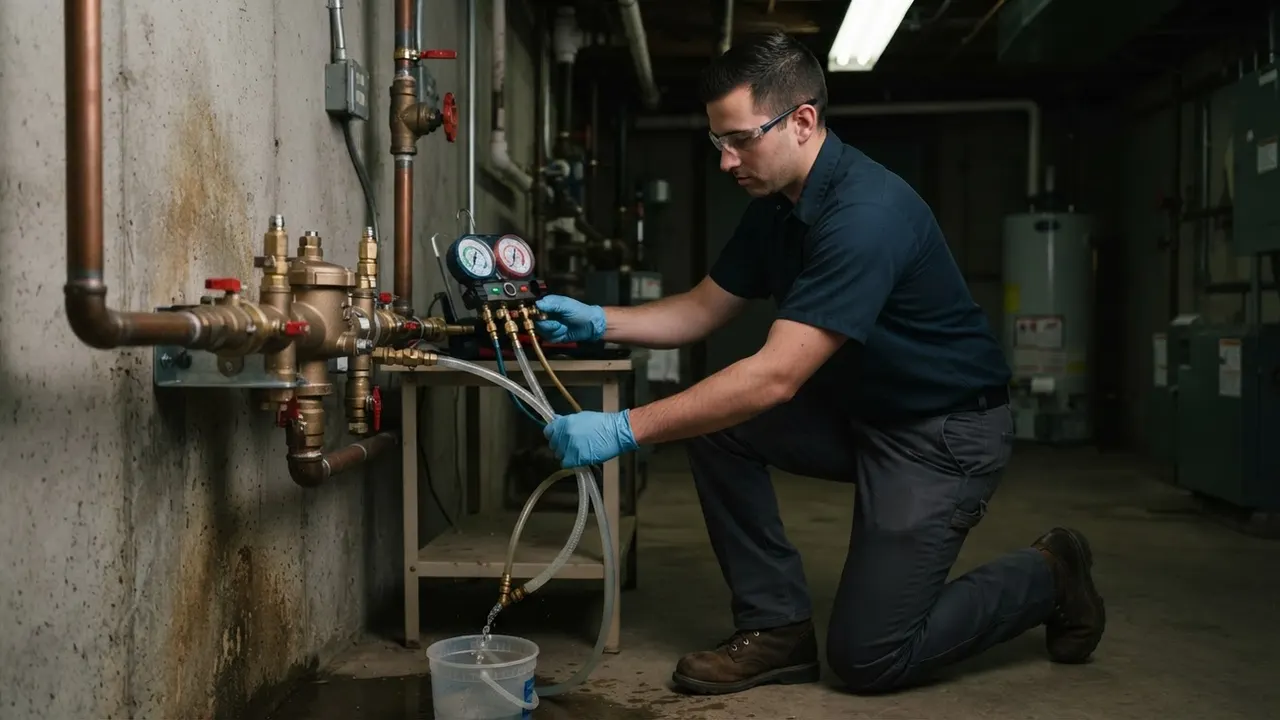
An AVB is a simple device with a short service life, and Utah water systems enforce the certification requirement. Here is what you actually get when you put us on the schedule.
Avoid Water Shutoff Notices
Most Utah water districts send a compliance letter 30 to 60 days before they flag an account. We test, file the certification, and send you the report so the notice never turns into a shutoff. One visit covers the whole property if you have multiple assemblies.
Catch Freeze Damage Early
An atmospheric vacuum breaker has a brass body and a rubber disc that cracks after a hard freeze. We pressure-test the air inlet and check for weeping at the bonnet. Catching a cracked AVB in March costs a fraction of what a failed assembly costs in July.
Protect Irrigation Water Quality
AVB testing for Utah residential irrigation keeps fertilizer, soil, and standing water out of your household supply. We test at the hose bib adapter and verify the critical level is set above the highest downstream outlet, which is the most common installation mistake we find.
One Report, Every Assembly
We test AVBs, pressure vacuum breakers, and double check valve assemblies on the same trip and submit one consolidated report to your water district. That saves you a second call-out fee and keeps your cross-connection control file current for the year.
Google ★★★★★4.9
Fast, professional, and they actually filed the report with the water district. My AVB failed on a Tuesday and was repaired and certified by Wednesday afternoon. The technician explained what he was doing and did not try to upsell me on anything.
Yelp ★★★★★4.8
We manage several rental properties and use them for all our AVB testing. They show up in the window they promise, file the reports, and send us the PDFs the same day. That kind of reliability is hard to find.
BBB ★★★★★4.9
Called about a compliance letter from the city and they got us on the schedule the next morning. The tester found a cracked disc, replaced it, and re-tested on the spot. The district accepted the certification without any issues.
Google ★★★★★5.0
We are on a rural route and were worried about getting a tester out here. They put us on a scheduled run, tested all four AVBs on the property, and replaced two that had freeze damage. Fair price and no special trip charge.
Utah Backflow Specialists has been testing backflow assemblies since 2016, and AVBs are one of the most common assemblies we see on residential irrigation and small commercial lines. Our testers hold Utah Division of Drinking Water backflow tester certification and carry AWWA backflow prevention certification. We have run tests in every corner of the state, from high-desert systems in the Uinta Basin to red-rock irrigation in Washington County, and we know how each water district wants its reports formatted.
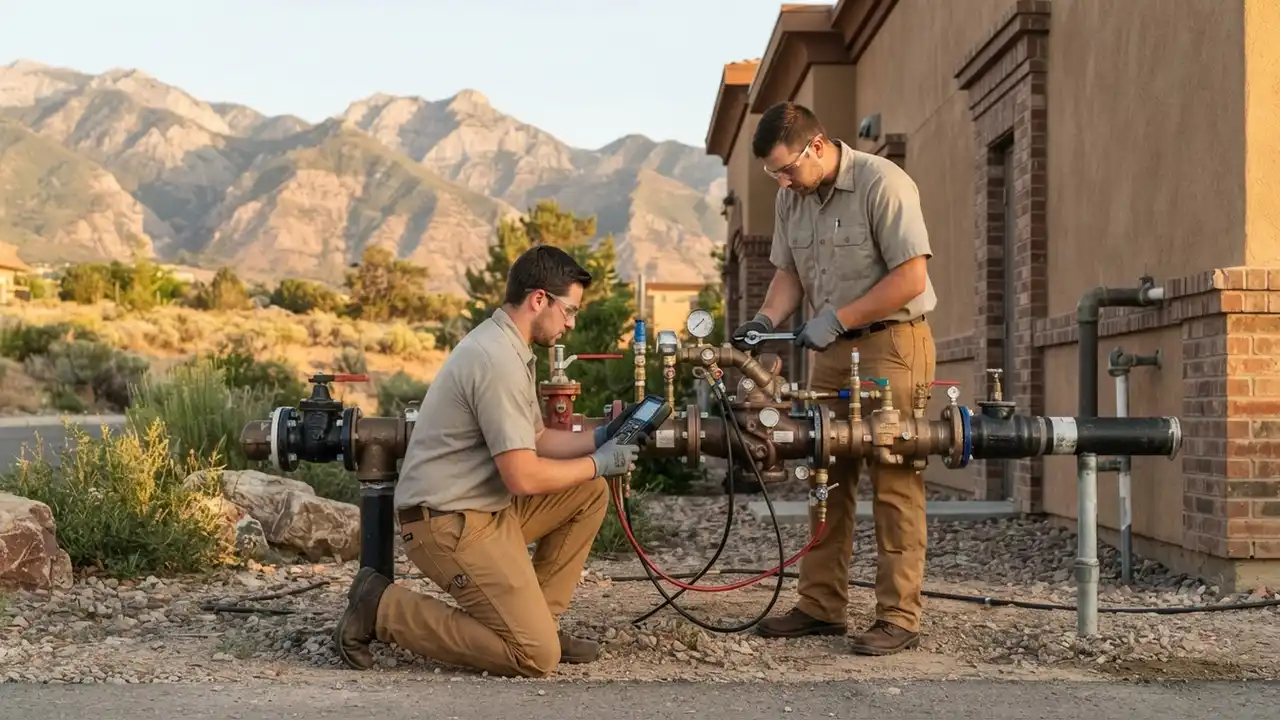
We run AVB backflow testing Utah-wide, with scheduled routes through the Wasatch Front, the Uinta Basin, the West Desert, and Washington County. Whether you are in a metro suburb or a rural town, you get the same certified tester, the same test procedure, and the same district filing. Here are a few of the communities we serve.
Sandy irrigation systems are often older, and we see a lot of AVBs that need disc and float replacements at spring start-up. We test and repair on the same visit.
Draper lots sit on slopes, which puts AVBs at the top of the run and exposes them to freeze damage. We check install height and test before the irrigation season.
Cottonwood Heights has mature landscaping and older assemblies. We test AVBs on the irrigation line and file the certification with the local water district.
Farmington properties often have AVBs near the foundation, where winter freeze damage is common. We test, repair, and certify in one trip.
Vernal's high-desert water carries grit that wears check valve seats. We flush the assembly, test it, and replace worn parts on the same visit.
Woods Cross residential irrigation systems are usually single-AVB setups. We test the assembly, file the report, and remind you when the next annual test is due.
Plain City properties on larger lots often have multiple irrigation zones. We test every AVB on the property and file one consolidated report.
Grantsville sits in the West Desert, where hard freezes arrive early. We catch freeze damage on AVBs in the spring and replace cracked bodies the same day.
Delta farms and ranches run pivot lines with AVBs that take a beating. We schedule regular routes through Millard County and test every assembly on the property.
La Verkin's longer irrigation season means more wear on AVB discs and floats. We test in the fall and repair anything that will not hold.
Loa properties are on a rural route, and we schedule tests on the next run through Wayne County. Same certified test, same district filing.
Green River irrigation water is heavy with grit, and AVB check valves clog faster here. We flush the seat, test the assembly, and replace parts as needed.
Apple Valley's sandy soil pushes debris into AVB check valves. We clear the seat, test the assembly, and verify the install height above the critical level.
Veyo properties on irrigation wells need annual AVB certification. We test the assembly, file the report, and handle repairs on the same visit.
Holden is on our Millard County route, and we test AVBs on farms and residential irrigation lines. Reports are filed with the local water district.
Real experiences from customers who chose our Atmospheric Vacuum Breaker AVB Testing services.
“My irrigation AVB failed the spring start-up test and I had no idea what that meant. The technician showed me the cracked disc, swapped it in about 20 minutes, and re-tested it on the spot. He filed the report with the water district before he left. No second visit, no runaround.”
Mark R.
Homeowner, Sandy
“We have 14 AVB assemblies across three common areas, and getting them all tested used to take two contractors and three weeks. Utah Backflow Specialists did the whole property in one day, tagged each assembly, and sent one consolidated report. The board finally has a clean compliance file.”
Dana K.
HOA Manager, Draper
“I run irrigation on a couple of pivot lines and the AVBs take a beating out here. They came out on a scheduled route, tested every assembly, and replaced two that had freeze damage from last winter. Fair price, and they did not try to sell me anything I did not need.”
Trent B.
Farm Owner, Delta
Real answers to the questions we hear most often from local homeowners and property managers.
The umbrella service that covers every assembly type on your property. If you have an AVB plus a pressure vacuum breaker or a double check, we test them all on one visit and file a single report with your water district.
View Backflow Prevention Assembly TestingRPZ assemblies are required on high-hazard commercial and irrigation lines where an AVB is not enough. We test the relief valve and both check valves, and we can repair a discharging relief valve on the same trip.
View Reduced Pressure Principle Assembly RPZ TestingDCVAs show up on fire lines and low-hazard commercial services. If your property has both an AVB on irrigation and a DCVA on the domestic line, we test both and submit one combined certification to your district.
View Double Check Valve Assembly DCVA TestingPVBs look like AVBs but can hold continuous pressure, which makes them common on Utah irrigation systems with a booster pump. We test the air inlet and the check valve, and we check the critical level height while we are there.
View Pressure Vacuum Breaker PVB TestingSVBs are a newer assembly used where an AVB cannot be installed high enough. We test the spill-resistant float and verify the assembly is not under continuous pressure, which is the most common install error we correct.
View Spill-Resistant Vacuum Breaker SVB TestingFire lines need annual backflow testing under Utah code, and the assembly type determines the test procedure. We coordinate with your fire sprinkler contractor so the system is not left out of service longer than necessary.
View Fire Sprinkler System Backflow TestingCall 555 123456 or email info@utahbackflowspecialists.com and we will confirm your assembly type, water district and a two-hour arrival window. Phones are answered Monday through Friday, 8 a.m. to 6 p.m., with emergency dispatch available for failed assemblies and frozen backflow preventers. Same-day appointments are common along the Wasatch Front.
Phone
555 123456Address
5127 W Miller Crossing Dr, Herriman, UT 84096
Hours
Mon–Fri: 7AM – 7PM
Sat: 8AM – 4PM
Sun: Emergency Only
24/7 Emergency Available