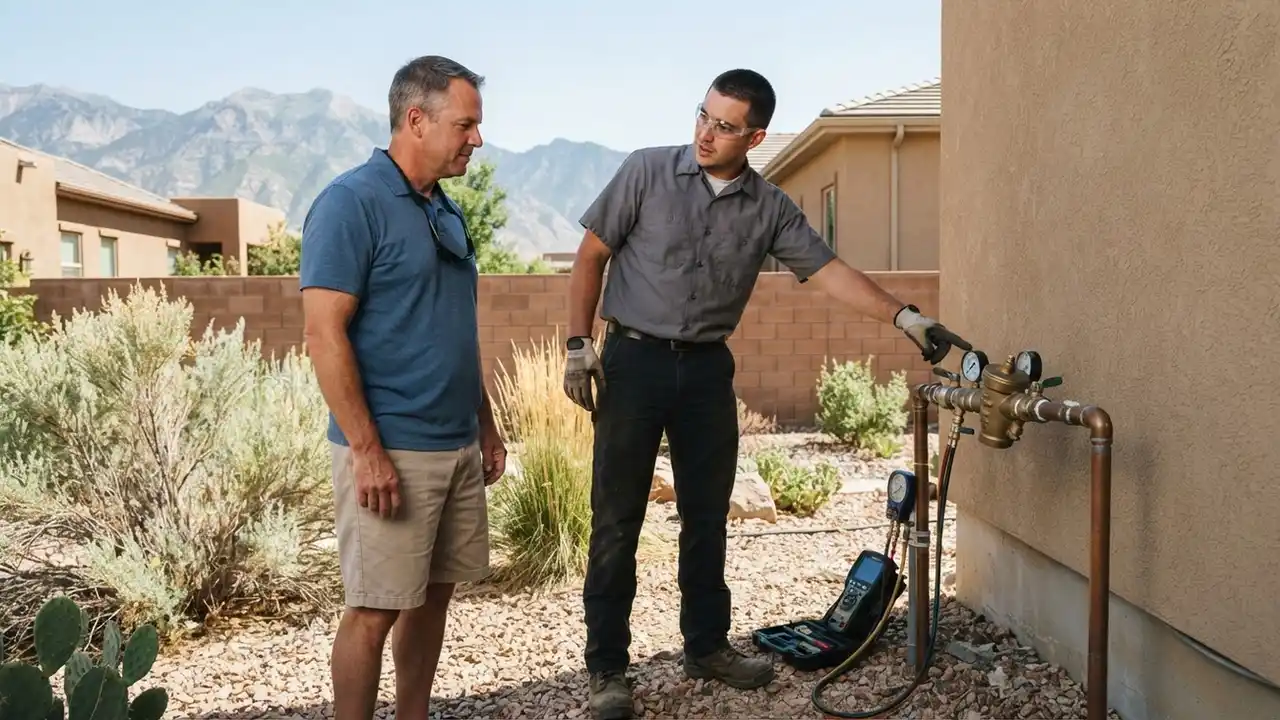
To prepare your irrigation system for backflow testing, you need to locate your backflow assembly, find the shut-off valve, clear access to the test ports, and make sure the system is off. That's the short answer. The rest of this post walks you through each step so your test goes smoothly and you avoid a failed inspection.
We're Utah Backflow Specialists, and we've tested thousands of irrigation assemblies across the Wasatch Front. Most failed tests we see come down to simple prep issues - a stuck valve, a buried test cock, or a system that wasn't shut down properly. Here's how to get it right.
Why Irrigation Backflow Testing Matters in Utah
Irrigation backflow testing in Utah is required annually by most municipal water departments, and it's the law for anyone with a sprinkler system connected to a potable water supply. The test confirms that your backflow preventer is stopping contaminated water from reversing into your drinking water lines.
Utah's dry climate and heavy irrigation use make this especially important. When your sprinkler system runs, it's pulling water that may have picked up fertilizers, pesticides, or animal waste. Without a working backflow assembly, a sudden pressure drop - from a fire hydrant use or a main break - can siphon that water back into your home's plumbing.
We handle Irrigation System Backflow Testing in Utah for homeowners and property managers. The test itself takes about 15-20 minutes, but the preparation you do beforehand determines whether it passes on the first visit.
What to Do Before Sprinkler Backflow Testing in Utah
Before sprinkler backflow testing in Utah, you should shut off your irrigation system, locate the backflow assembly, and clear any obstructions around it. These three steps solve 80% of the problems we encounter in the field.
Start by turning off your sprinkler controller. You don't need to drain the lines - just make sure no zones are running. If your system has a master valve, close it. This prevents water from flowing during the test and gives the tester a stable reading.
Next, find your backflow assembly. On most Utah residential systems, it's a PVB (pressure vacuum breaker) or a DCVA (double check valve assembly) mounted above ground near the foundation, usually on the side of the house closest to the water meter. Some older homes have it in a basement or crawlspace, but that's rare for irrigation.
Once you've located it, clear away any dirt, mulch, or landscaping fabric covering the test ports. The tester needs clean access to attach gauges. If your assembly is in a valve box, open the lid and remove any debris.
How to Find Your Sprinkler Shut-Off Valve Before Backflow Testing in Utah
Finding your sprinkler shut-off valve before backflow testing in Utah is easier than most homeowners expect. It's usually a ball valve or gate valve on the main irrigation line, located between the water meter and the backflow assembly.
Look for a brass or PVC valve handle near your water meter. In many Utah homes, the irrigation line branches off right after the meter, and the shut-off is within a few feet. If you can't find it, check your basement or crawlspace where the main line enters the house - some builders put the irrigation tie-in there.
If your system was installed before 2000, the shut-off might be a gate valve that's seized from years of mineral buildup. Don't force it. A seized valve can break, and then you're looking at a repair before you can even test. We see this a lot in older neighborhoods, especially in Backflow Testing in Salt Lake City where many homes date back to the 1950s and 1960s.
Once you find the valve, turn it clockwise to close it. You should hear water stop flowing. If nothing happens, the valve may be stuck open - call us before your test.
Irrigation Backflow Testing Checklist for Utah Homeowners
This irrigation backflow testing checklist for Utah homeowners covers everything you need to do before the tester arrives. Run through it the day before your appointment.
- Shut off the irrigation controller. Set it to "off" or "rain delay" so no zones activate during the test.
- Close the main irrigation shut-off valve. This isolates the system from the water supply.
- Locate the backflow assembly. Confirm it's accessible and not buried.
- Clear debris from test ports. Remove dirt, spiderwebs, or mulch from the test cocks.
- Check for visible leaks. A dripping assembly often fails the test - note any drips.
- Have your test report from last year ready. The tester needs the assembly make, model, and serial number.
- Make sure someone is home or provide access. The tester needs to get to the assembly and sometimes inside to check the meter.
If you're in an area with heavy clay soil, like parts of Backflow Testing in West Jordan, make sure the assembly isn't sitting in a puddle. Standing water can hide leaks and make the test unreliable.
Common Irrigation Backflow Test Failures in Utah
Common irrigation backflow test failures in Utah usually involve a stuck check valve, a damaged O-ring, or a test cock that won't open. These are mechanical issues, not preparation problems - but knowing them helps you decide whether to repair or replace.
Here's what we see most often:
- Failed check valve. The most common failure. The valve doesn't seal properly, allowing backflow. On a DCVA, this means replacing the check assembly.
- Leaking test cock. If the test cock drips when closed, it fails. Sometimes a simple O-ring replacement fixes it.
- Debris in the assembly. Sand, grit, or mineral deposits can prevent a proper seal. A thorough flush sometimes solves this.
- Frozen or cracked body. Utah winters crack unprotected assemblies. If yours cracked last winter, it needs replacement before testing.
- Improper installation. We occasionally find assemblies installed below grade or without proper clearance, which fails code.
If your assembly fails, we can usually repair it on the spot for common issues. For major failures, we'll give you a written quote for replacement. Most residential PVB or DCVA replacements in 2026 run between $350 and $650 installed, depending on the assembly and any plumbing modifications needed.
When to Call a Professional
Call a professional if you can't find your shut-off valve, if the valve is seized, or if you see water leaking from the assembly. These are signs that something needs repair before testing - and forcing a test on a damaged assembly wastes everyone's time.
We also recommend calling us if your assembly is older than 10 years. Utah's hard water takes a toll on internal components, and an aging assembly is more likely to fail. We can inspect it, tell you what's needed, and schedule the test and any repairs in one visit.
Our team handles Backflow Prevention Assembly Testing in Utah for all assembly types - PVB, DCVA, RPZ, and more. We're licensed, certified, and we file your test report with your water department so you don't have to.
Frequently Asked Questions
How do I prepare my irrigation system for backflow testing in Utah?
Shut off your irrigation controller and main shut-off valve, locate your backflow assembly, and clear any debris from the test ports. Make sure the assembly is accessible and note any leaks. That's it - the tester handles the rest.
Do I need to be home for irrigation backflow testing in Utah?
You don't have to be home if the tester has clear access to the assembly and the water meter. But someone 18 or older should be available by phone in case we need to get inside. If your assembly is in a locked area, you'll need to provide access.
What time of year should I schedule irrigation backflow testing in Utah?
Schedule in spring, ideally March through May, before you start watering. Most Utah water departments require testing by June 1. Fall testing (September-October) is also common for systems that run year-round. Avoid scheduling during the first freeze.
What happens if my irrigation backflow test fails in Utah?
If your test fails, we'll tell you what failed and why. Most failures need a repair - a new check valve, O-rings, or a test cock. We can often fix it on the spot. If the assembly is beyond repair, we'll quote a replacement. You'll need a passing test to keep your water service active.
How long does an irrigation backflow test take?
The test itself takes 15-20 minutes for a standard PVB or DCVA. If repairs are needed, add 30-60 minutes. We'll let you know upfront if we find issues.
Get Help with Backflow Testing in Utah
If you'd rather not deal with the prep work, we've got you covered. Our certified testers handle everything from locating your assembly to filing the paperwork with your water department.
Call Utah Backflow Specialists at 555 123456 to schedule your irrigation backflow test. We serve homeowners and businesses across the Wasatch Front and beyond.